
Cape May– NJ, DE, MD
Road Trip Tally
States: NJ DE MD
Miles: 750
Total_Miles: 6,750
MPG: 26.5
Keeper Photos: 275
Total: 2,275
New Species Added: 14
Total Road Trip Bird List: 113

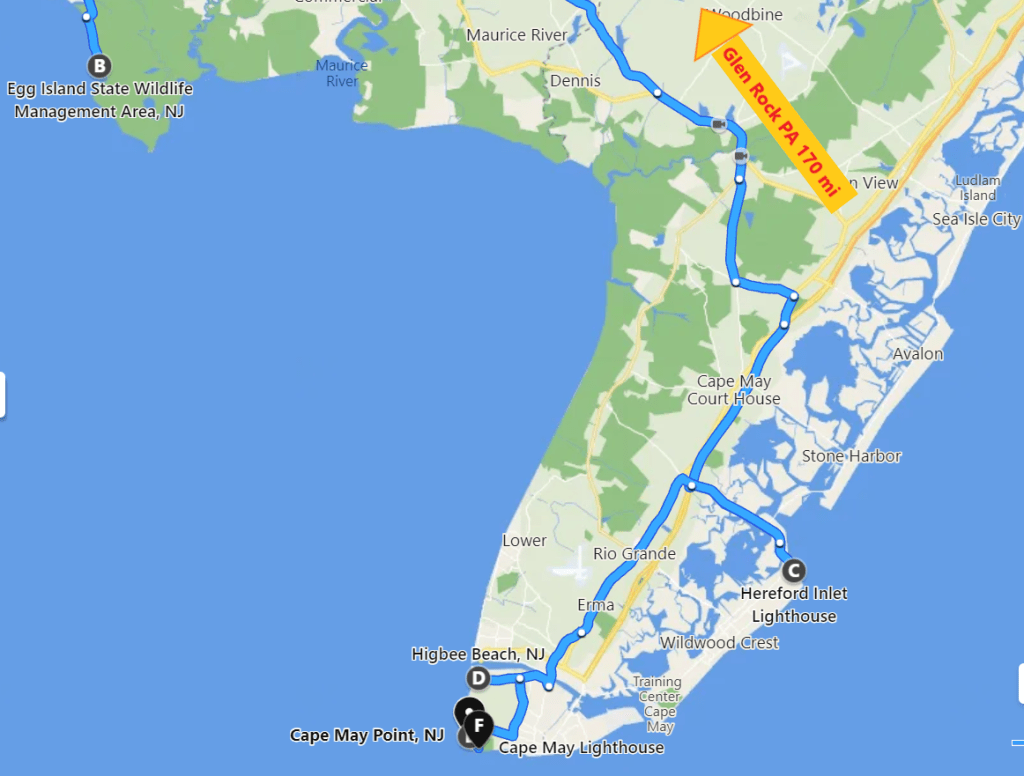
Cape May has been on my short list of destinations for some time. The relatively unspoiled coastal beauty and unique arrangement of habitats are surprising to some, given the proximity to east coast urban areas. These aspects are only intensified in the fall, as sun-seeking crowds depart. Cape May lies along the Atlantic migration paths of ridiculous numbers of birds that are funneled down the peninsula, where they congregate in huge flocks. Passerine species, such as warblers, thrushes, and flycatchers, appear in greater concentrations here than at any other location in the east, often at eye level and oblivious to people in the low vegetation. At various times from late summer on, the schedules of multitudes of shorebirds, raptors, finches, and ducks result in unparalleled concentrations of many species. When combined with the dozens of observation and access points, protected areas, interesting architecture, wide beaches, and captivating scenery, Cape May is a hidden gem of autumn destinations.

Structures
Click on images to enter gallery or to view larger.

East Point Lighthouse 
Cape May Lighthouse 
South Dennis Trinity UMC 
Abandoned Schoolhouse 
Hereford Inlet Lighthouse 
Goshen UMC

Cape May contains a mosaic of marine, estuarine, wetland, and upland habitats; these include the barrier beaches and backbarrier lagoon system on the Atlantic side, the beaches and marshes on the Delaware Bay shore, inland wetlands including coastal plain intermittent ponds, hardwood and Atlantic white cedar swamps, upland forests, and agricultural areas.
Birds are a social event at Cape May, if you prefer. However, there are countless trails where you can be out all day without seeing anyone.
” This part of the New Jersey backbarrier system is characterized by its extensive network of salt marsh islands and small, protected, shallow bays, connected by a network of channels and tidal creeks. There is a higher percentage of salt marsh in this complex than in the bays to the north. Barrier islands on the Atlantic coast from Great Egg Inlet south to Cape May are generally developed residentially; only the beach fronts and small areas near the inlets remain undeveloped. The extensive salt marsh islands along the mainland shoreline and the salt marsh islands in the bay are predominantly high marsh, with salt-meadow cordgrass the dominant species. Small areas of natural beach and dune communities exist along the barrier islands. These beach communities include a coastal dunegrass community dominated by American beachgrass. Over 300 species of migrating birds utilize the Cape May Peninsula, especially during the fall. An average of about 70,000 raptors is counted each fall at the hawk watch at Cape May Point. At these times, the raptors concentrate at the tip of the peninsula, waiting for favorable weather to cross Delaware Bay. The varied upland, wetland, and open water habitat on the Cape May Peninsula provides roosting sites and abundant bird, mammal, insect, and fish prey species for migrating raptors. Millions of songbirds, including at least 75 species of long-distance Neotropical migrant birds, migrate south along the Atlantic coast in the fall and are concentrated by weather and geography on Cape May. The Cape May corridor, along with Dennis Creek Marsh and Great Cedar Swamp, is an inland forested greenbelt which runs the length of the Cape May Peninsula, linking the Pinelands to the coastal areas on Cape May and linking together 18 priority sites for biodiversity recognized by the New Jersey Natural Heritage Program within the remaining contiguous forest.” Citation: U.S. Fish and Wildlife Service.
Sun and Moon
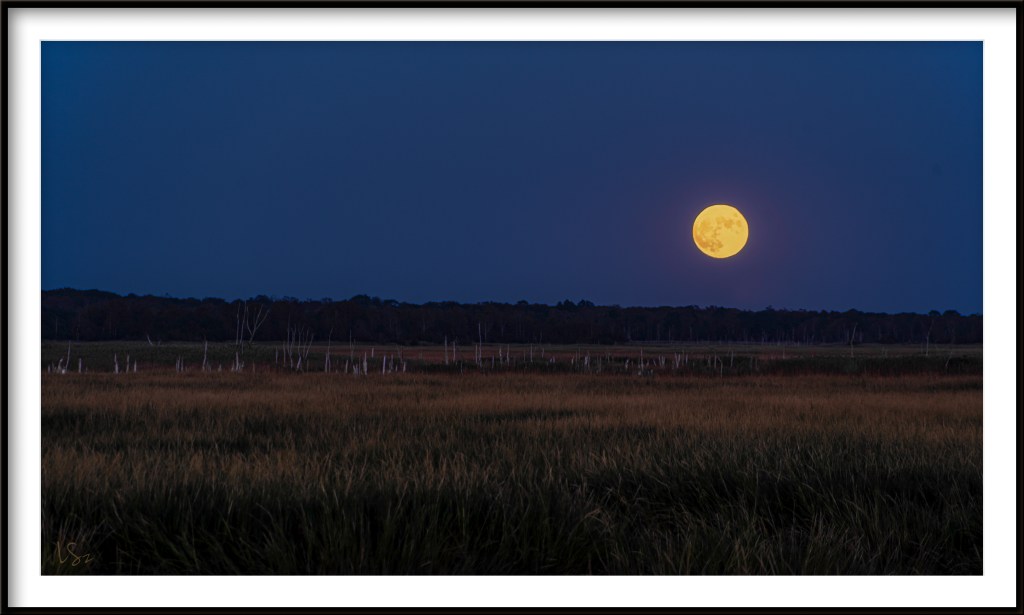
It is only a few days a year when you get a simultaneous fair-weather sunset and moonrise.
Fewer yet are the nights when I get to experience such an event from the middle of a marsh, that particular salty Atlantic coastal fragrance carried in on a mild shirtsleeves breeze, while surrounded by sounds of rails, night herons, and various other unidentified night noises…
Click on images to enter gallery or to view larger.




Passage
I am always on the lookout for doors, gates, bridges, paths, fences, etc. to include in my Photography Portfolio Passage Gallery.


Migration Data
Since this was primarily a trip focused on observing and documenting fall migration, with photography being incidental, I have included my eBird data below. I didn’t spend much time looking for or identifying pelagic birds, or the list could have surpassed 100.
Location Cape May County
Checklist Comments Various locations around Cape May
Submitted from eBird for Android, version 2.8.5
Totals 56 Species observed
Observations
- Canada GooseNumber observed: 65
- Mute SwanNumber observed: 14
- Blue-winged TealNumber observed: 7
- American WigeonNumber observed: 46
- MallardNumber observed: 51
- American Black DuckNumber observed: 1
- Northern PintailNumber observed: 4
- Ring-necked DuckNumber observed: 4
- Wild TurkeyNumber observed: 3
- Rock Pigeon (Feral Pigeon)Number observed: present
- Mourning DoveNumber observed: 9
- Clapper RailNumber observed: 2
- KilldeerNumber observed: 1
- Greater YellowlegsNumber observed: 1
- Ring-billed GullNumber observed: present
- Herring GullNumber observed: present
- Double-crested CormorantNumber observed: 4
- Great Blue HeronNumber observed: 7
- Great EgretNumber observed: 10
- Black VultureNumber observed: 6
- Turkey VultureNumber observed: 44
- OspreyNumber observed: 3
- Northern HarrierNumber observed: 5
- Sharp-shinned HawkNumber observed: 37
- Cooper’s HawkNumber observed: 8
- Bald EagleNumber observed: 3
- Red-tailed HawkNumber observed: 2
- Belted KingfisherNumber observed: 1
- Red-bellied WoodpeckerNumber observed: 2
- Downy WoodpeckerNumber observed: 1
- Northern FlickerNumber observed: 5
- American KestrelNumber observed: 3
- Eastern PhoebeNumber observed: 1
- Blue JayNumber observed: 15
- American CrowNumber observed: 10
- Carolina ChickadeeNumber observed: 8
- Northern Rough-winged SwallowNumber observed: 2
- Tree SwallowNumber observed: 100+
- Ruby-crowned KingletNumber observed: 1
- Golden-crowned KingletNumber observed: 7
- White-breasted NuthatchNumber observed: 1
- Carolina WrenNumber observed: 7
- European StarlingNumber observed: 26
- Gray CatbirdNumber observed: 4
- Northern MockingbirdNumber observed: 7
- American RobinNumber observed: 2
- House SparrowNumber observed: present
- House FinchNumber observed: 1
- American GoldfinchNumber observed: 2
- Dark-eyed JuncoNumber observed: 3
- Song SparrowNumber observed: 11
- Eastern TowheeNumber observed: 1
- Red-winged BlackbirdNumber observed: 9
- Common GrackleNumber observed: X
- Common YellowthroatNumber observed: 2
- Yellow-rumped WarblerNumber observed: 100+

 Larry Goes